Manual Inspection vs Automated Vision Inspection: Speed, Accuracy, and Cost Comparison
Introduction
In modern manufacturing, quality inspection plays a critical role in ensuring that defective products do not reach customers. For decades, manufacturers have relied on manual inspection, where operators visually examine parts and identify defects.
However, as production volumes increase and quality requirements become stricter, traditional manual inspection is facing significant challenges.
Industries such as automotive, fasteners, electronics, and precision manufacturing increasingly require:
- 100% product inspection
- Higher inspection speed
- Consistent quality decisions
- Lower production costs
- Complete traceability
This has accelerated the adoption of automated vision inspection systems powered by industrial cameras, machine learning, and artificial intelligence.
This article compares manual inspection vs automated vision inspection in terms of:
- Inspection speed
- Accuracy and consistency
- Labor cost
- Defect detection capability
- Return on investment (ROI)
1. What Is Manual Inspection?
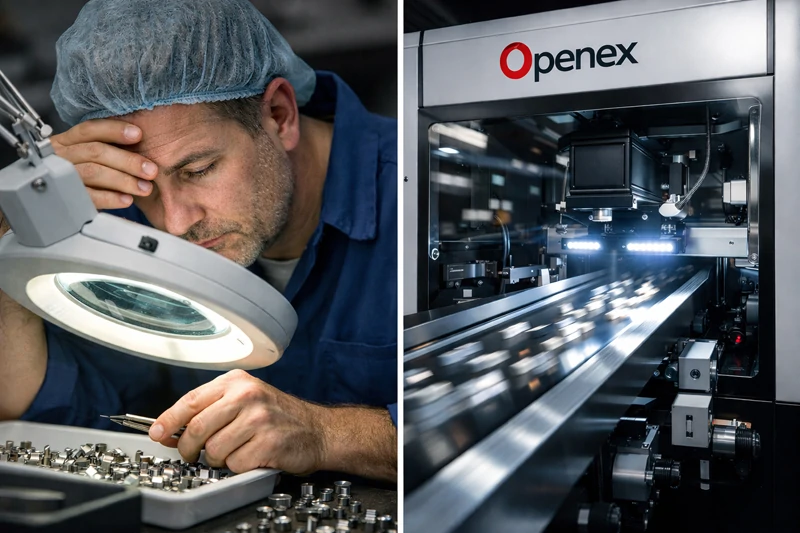
Manual inspection is the traditional quality control method where trained operators inspect products using:
- Human vision
- Magnifying glasses
- Calipers
- Micrometers
- Gauges
- Sampling procedures
Operators compare parts against quality standards and decide whether products pass or fail.
For example, in a fastener manufacturing plant, workers may manually inspect:
- Screw head appearance
- Thread condition
- Surface scratches
- Rust
- Dimensional differences
Manual inspection remains common because it requires relatively low initial investment and can be flexible for small production quantities.
However, as manufacturing becomes faster and more complex, its limitations become increasingly obvious.
2. Limitations of Manual Inspection
2.1 Human Vision Has Natural Limitations
The human eye is powerful, but it cannot maintain the same inspection performance over long production periods.
Factors affecting manual inspection include:
- Fatigue
- Concentration loss
- Lighting conditions
- Individual experience
- Subjective judgment
Two operators may evaluate the same defect differently.
For industries requiring strict quality standards, inconsistent decisions can create:
- False acceptance of defective parts
- Unnecessary rejection of good parts
- Customer complaints
2.2 Manual Inspection Cannot Match High-Speed Production
Modern manufacturing lines often produce:
- Thousands of screws per hour
- Millions of small components per month
- Continuous 24/7 production
It is impossible for human inspectors to check every single part at high speed.
As a result, many manufacturers rely on sampling inspection:
Example:
- Production: 100,000 fasteners/day
- Manual inspection: Check only 1–5% of products
The problem: A defective part may still pass through and reach customers.
2.3 Labor Cost Continues to Increase
Manual inspection requires:
- Multiple operators
- Training
- Shift management
- Quality supervision
For large-scale production, labor becomes a significant operating cost.
In addition, manufacturers increasingly face challenges finding experienced inspectors who can maintain consistent accuracy.
3. What Is Automated Vision Inspection?
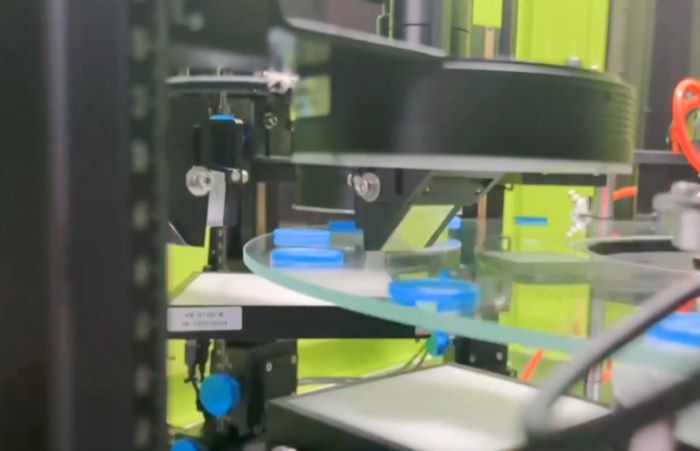
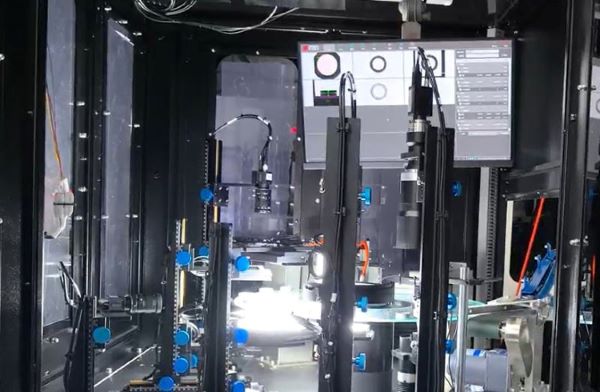
An automated vision inspection system uses cameras, lighting, image processing software, and AI algorithms to automatically inspect products.
A typical system includes:
- Feeding System: Parts are automatically delivered into the inspection area. Common solutions include vibration feeders, conveyors, and rotary systems.
- Industrial Cameras: High-resolution cameras capture images from multiple angles. Depending on the application, systems may use top cameras, side cameras, bottom cameras, and 360-degree inspection configurations.
- Image Processing Software: The system analyzes images to identify surface defects, dimensional errors, missing features, and shape abnormalities.
- Automatic Sorting: After inspection, products are automatically separated into OK and defective groups. This allows manufacturers to achieve continuous, unmanned quality control.
4. Speed Comparison: Human vs Machine
Speed is one of the biggest advantages of automated inspection.
- Manual Inspection Speed: Human inspection speed depends on part complexity and operator experience. For small precision components, inspecting every part manually may take several seconds per piece, making 100% inspection unrealistic.
- Automated Vision Inspection Speed: Modern inspection machines can inspect hundreds or thousands of parts per minute. For example, an AI fastener inspection machine can inspect up to 1,200 fasteners per minute while simultaneously checking dimensions, threads, and surface defects.
| Inspection Method | Typical Speed |
|---|---|
| Manual inspection | Several seconds per part |
| Sampling inspection | Limited coverage |
| Automated vision inspection | Hundreds–thousands of parts/min |
5. Accuracy Comparison: Human Judgment vs AI Inspection
- Manual Inspection Accuracy: Human inspection accuracy depends heavily on operator skill, fatigue level, and the working environment. Common problems include missed defects (small cracks, scratches) and inconsistent judgments between inspectors.
- Automated Vision Inspection Accuracy: Machine vision systems provide repeatable inspection results and objective pass/fail decisions. AI-based inspection systems can detect difficult defects like micro-scratches and subtle appearance differences, maintaining the same standard 24/7.
6. AI Vision Inspection: The Next Generation of Quality Control
Traditional machine vision systems depend on predefined rules (e.g., “If the edge is outside this boundary → reject.”). This works well for simple, predictable defects.
However, manufacturing defects are often unpredictable. This is where AI excels. AI vision inspection uses deep learning algorithms to recognize defect patterns from images, learning from good and bad samples.
This allows for better detection of complex defects such as:
- Irregular scratches
- Complex surface patterns
- Slight appearance variations
7. Cost Comparison: Manual vs Automated Inspection
Many manufacturers initially consider manual inspection cheaper, but the total cost includes labor, quality losses, and production downtime.
- Manual Inspection Cost: Main costs are recurring expenses for inspectors, training, and management. These costs increase proportionally with production volume.
- Automated Inspection Cost: The initial investment includes the inspection machine and setup. However, long-term benefits include reduced labor, lower defect rates, and higher production efficiency.
8. ROI of Automated Vision Inspection
The return on investment for industrial automation solutions usually comes from four areas:
- Labor Reduction: One automated system can replace multiple repetitive inspection tasks.
- Reduced Defect Escape: Preventing defective products from reaching customers avoids recalls, warranty costs, and reputation damage.
- Increased Production Efficiency: Automated inspection allows for faster production lines, continuous operation, and reduced bottlenecks.
- Better Customer Qualification: Many automotive and industrial customers require suppliers to achieve zero-defect goals and provide traceability, which automation helps fulfill.
9. When Should Manufacturers Choose Automated Vision Inspection?
Automated inspection is especially suitable when:
- High Production Volume: For parts like fasteners, bearings, and electronic components.
- Strict Quality Requirements: For industries like automotive, aerospace, and safety-critical products.
- Small Defects Matter: When tiny cracks, scratches, or dimensional variations are unacceptable.
- 100% Inspection Is Required: When every part must be checked before shipment, automation becomes essential.
10. Manual Inspection vs Automated Vision Inspection: Final Comparison
| Category | Manual Inspection | Automated Vision Inspection |
|---|---|---|
| Speed | Slow | Very fast |
| Accuracy | Depends on operator | Consistent |
| Inspection coverage | Usually sampling | 100% inspection |
| Labor requirement | High | Low |
| Data recording | Limited | Complete traceability |
| Defect detection | Limited | Advanced |
| Operating time | Limited by humans | 24/7 capability |
| Long-term cost | Increasing | Lower |
Conclusion
Manual inspection has played an important role in manufacturing, but modern production demands higher speed and accuracy. Automated vision inspection systems offer a smarter approach by combining industrial cameras, precision measurement, AI defect detection, and automatic sorting.
For industries such as fasteners, automotive components, and electronics, automated inspection is an essential technology for reliable quality control. As manufacturing moves toward Industry 4.0, AI-powered vision inspection solutions will continue to replace repetitive manual tasks and help manufacturers achieve the highest standards of quality.